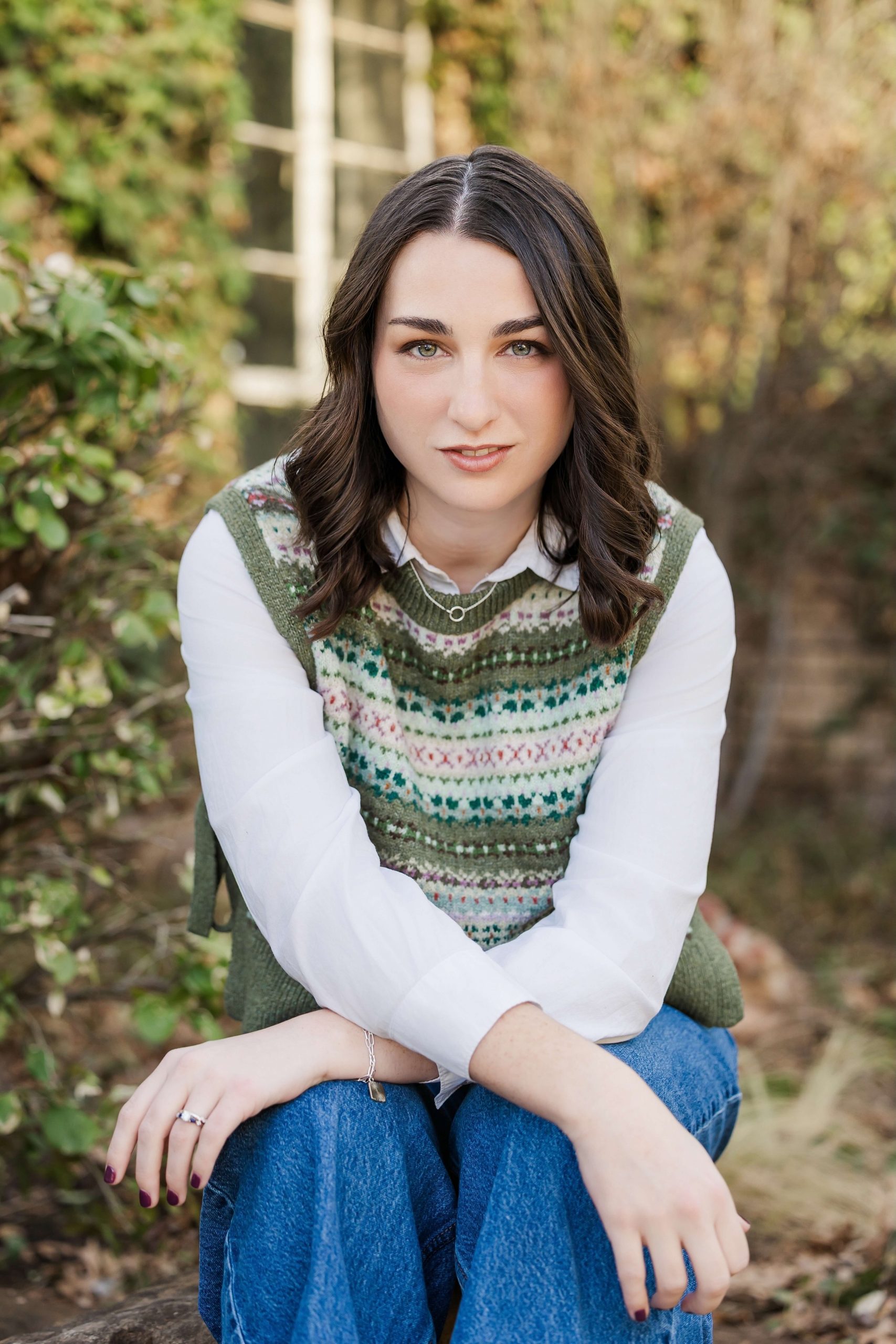
2025 Fiction Prize Winner Interview: Annie Bruno

If anyone had told Annie Bruno that the novel she thought was on the verge of publication wouldn’t come out for another 30 years, she would never have believed it. How did she sustain her belief? She didn’t. But she found her way back to the novel, and it found its way into the world.

Preorder Until You Find Your Way from Itasca BooksAmazonBarnes and Noble, or Bookshop 

What inspired you to write Until You Find Your Way?

The novel began with Beada, inspired by the memory of a childhood friend’s mother who raised horses in rural Minnesota. She was strong, self-assured, and a little loose with rules—qualities that made her magnetic to me as a young girl. After high school I left that rural landscape, but the memory of her never left me. She embodied a physical confidence and groundedness that felt elemental, almost mythic, and I think I carried that image of her into adulthood as a kind of touchstone.

As Beada developed on the page, she became more than that early inspiration. She evolved into a composite of women I’ve known—my mother included—and parts of myself. My mother also carried beauty and strength, though hers was quieter, less overtly rebellious. The tension between those two expressions of womanhood fascinated me. Beada’s story grew into an exploration of the quiet struggle between expectation and inner truth, particularly within family life.

There is a middle terrain in raising a family—those adolescent years—when communication becomes more fraught and expectations go underground. Parents and children begin wrestling privately with identities that no longer align as easily as they once did. In this novel, the early death of Beada and Porter’s first child intensifies that isolation. Grief becomes an unspoken presence at the table. Everyone longs for connection, yet each retreats inward. That dynamic—yearning and distance existing simultaneously—became the emotional center of the book.

What does “strong” mean to you?

Strength, to me, is the balance between taking responsibility for your life and being willing to ask for what you need. The first requires self-knowledge. You have to understand who you are—what feels true—before you can move toward it. Without that clarity, it’s easy to live according to expectations and then quietly blame others for the dissatisfaction that follows.

Blame can break bonds. In the novel, both generations are coming of age. Beada and Porter are navigating separation—physical and emotional—while their children are trying to define themselves as adults. Father Sean, the third point in the unconventional love triangle, is also caught between duty and authenticity. Each character, in their own way, is trapped in the gap between the life prescribed to them and the life that feels honest.

In fact, the epigraph of the novel is a line from a poem by Eamon Grennan. The novel is structured based on that line about a bat caught indoors, seeking freedom, and it’s because the main characters are caught in a room together, blind to each other in certain ways, but needing each other to find their way to the open window, where they can be released from their own struggles.

Why portray women’s interior lives with such depth?

Our interior lives are the source of common ground. As a young reader, novels that revealed women’s private thoughts helped me recognize and trust my own. They made me feel less alone in experiences that often went unspoken.

That interest deepened during my graduate study. I wrote about A Question of Power by Bessie Head, a semi-autobiographical novel exploring identity, exile, and mental illness under apartheid in South Africa. I also studied Nectar in a Sieve by Kamala Markandaya, which portrays a woman married at twelve and struggling for resilience amid social upheaval in India. Though my life was vastly different—and far easier—these books shaped how I understood interiority as a site of resistance and dignity.

I have also always been interested in the relationship between women’s inner lives and their bodies. Girls often become objects of perception before they have fully formed their own self-understanding. Fiction helps women to distinguish what is true about themselves from what others want them to be. Being able to distinguish that from a young age makes an enormous difference in the paths women take and ultimately how fulfilling their lives become.

What drew you to explore grief and a love triangle?

Grief asks for a particular kind of intimacy. It is inexpressible, yet it demands expression. When someone experiences profound loss, language often fails. It can feel impossible to be met by another person—emotionally, physically, spiritually—at the depth of that pain.

The love triangle in the novel emerged organically from a confession scene. Beada, who is not religious and feels like an outsider in her small town, nevertheless continued to go to confession after leaving the church, because it gave her a space to talk candidly about her own life. After her son’s death, her talks with Father Sean became increasingly essential. They gave her comfort and solace her husband was at a loss to provide. Because of that, she both longed for her connection with Father Sean and resisted it.

Porter, meanwhile, is not completely absent. He is struggling in his own way to return to the family—to repair what he cannot articulate. He senses Beada’s distance and perceives the presence of a third party but misidentifies both her motivation and the person. As Beada, Porter, and Father Sean collide and retreat, as they deal with their own aftershocks, each must confront what they truly want and what they are willing to sacrifice to get it.

How does the 1993 small-town setting shape the story?

If not set in 1993, the novel could not have unfolded as does. Without the internet, mobile phones, or social media, distance carried real weight. Porter, living abroad in Bangkok, cannot easily bridge the gap with his children in Minnesota. Communication requires effort and delay. Silence lingers longer, and so do secrets. Geographic cures are more effective because emotional separation is inherent in long distances.

For the children, their father’s life in Bangkok feels mysterious, almost mythic, on one hand, but on the other, so far away as to have no real meaning or impact on their own lives, a feeling that extends to their father himself.

The other significant part of the 1990s setting is that the kids grow up and make decisions in relatively privacy that doesn’t seem to exist for teens anymore. Emilee’s choices about school and Barry’s unusually mature relationship with an older girl develop without the constant visibility and scrutiny that adolescents are hard-pressed to avoid today.

What role does storytelling play today, especially for women’s voices?

To me, storytelling remains what it has always been: shared experience, both escape and homecoming. It transports us into another consciousness while deepening our own.

Women’s voices, however, feel clearer and more unapologetic in my lifetime. When I listened to Catherine Connolly speak after taking office in Ireland in 2025, I was struck by how grounded her speech felt in priorities often voiced by women—care, equity, interconnectedness. It signaled to me how much space has opened for women to articulate power differently.

Literature and film that center women’s experiences—and pass measures like the Bechdel-Wallace Test—expand that space further. When readers encounter complex female protagonists, they internalize broader definitions of leadership, strength, and vulnerability. Storytelling doesn’t replace policy or activism, but it shapes the emotional landscape in which those forces operate. It builds empathy, and empathy precedes change.

Can you describe your creative process?

My process always begins with an image, whether it’s an image from a memory or something that I see or witness in the moment. When that image is strong enough, a story begins to take shape in my mind. All it takes is one scene that leads to another then another. The potency of that one image, for me, can launch a whole world. I’m not one for outlines, but once I have a first draft, I do map the primary and secondary story arcs. Every character needs to go on a journey of some kind. The need to change and evolve for us to care about them.

Editing is something I enjoy, so a big part of my process is doing an entire pass on the novel focused on one thing: the transitions between chapters, deepening the sense of place or a certain relationship. I have rewritten more than one novel changing from a first person to third person omniscient narration.

Having readers and feedback is a huge part of my process too. Finding a close reader who wants to help you is an enormous gift. I had several who helped Until You Find Your Way become what it is today.

What challenges did you face?

The hardest challenge was sustaining belief. Writing a novel requires enormous patience—not only with the work but with yourself. Your understanding of truth evolves as you age. Sometimes a new insight demands a structural change that ripples through hundreds of pages. You can spend months reworking a single motivation.

There were moments when trusted readers questioned revisions I knew were necessary. Holding onto my own sense of the book’s direction, even when external validation wavered, was the most difficult task. Yet those revisions ultimately made the novel deeper and more aligned with what felt meaningful to me.

What was your journey to publication like?

Long and nonlinear. I began the novel in my early twenties. The first draft was 575 pages, mailed in a cardboard box to an agent. It was once close to publication—an editor even took me to lunch in a room where John F. Kennedy Jr. happened to be—but it ultimately did not sell.

I was devastated. I concluded, incorrectly, that I had written the wrong kind of book. For years I tried other forms—short stories, essays, a screenplay, a young adult novel. Those explorations were valuable, but they also delayed my return to this manuscript.

In 2021, while visiting a childhood friend who was dying of cancer, she asked about my first novel. I told her it was sitting on a shelf. She said simply, “You have to publish it.” I knew in that moment I would, somehow. When I read it again, after so many years, I realized the book still mattered to me.

When I was ready to try again to find a publisher for Until You Find Your Way, I chose not to pursue an agent. Instead, I researched contests and submitted to the Howling Bird Press Fiction Prize. Only later did I realize the press was affiliated with Augsburg University, my undergraduate alma mater.

When the novel won, it felt unexpectedly full circle. The book had found its home in the same state where it was born imaginatively and where I first began to write seriously.

What do you hope readers take away?

I hope readers find strength for whatever they are facing. If the characters’ choices reveal an opening—a possibility for courage, reconciliation, or self-recognition—that would mean that my novel did what so many novels have done for me. Leave readers with that is what’s kept me in this publishing game my whole life. I’m so grateful to so many writers, and this is my attempt to return the experience.

Reading a novel is one of the most intimate relationships we enter. You sit alone, yet you are accompanied deeply. My hope is that this book offers that companionship. If it makes lasting friends wherever it travels, then it has done more than I could have ever asked of it.

2026 Howling Bird Press Nonfiction Prize Winner and Finalists

Congrats to the Winner and finalists of the 2026 Howling Bird Press Nonfiction Contest (listed in alphabetical order)

A profile about the author and winning manuscript will be released on our website in April.


2026 Howling Bird Press Nonfiction Prize Winner

Mellitus: Essays on Up/Rooting by Jennifer Jussel

Finalists

Elegy, 1991 by J. A. Bernstein

The Rabbit Witch Spell Book by Sheri Rysdam

Three Strands: Essays on Love, Food, and Loss by Judith Sharlin

My Ghost Fleet by Faith Shearin

Thank you to all our incredible submitters. We were blown away by the quality of the submissions we received and had an incredibly difficult time narrowing down to these semifinalists and finalists. We appreciate the talent, time, and dedication that goes into putting together such works and look forward to seeing you continue to blow readers away in your future writing endeavors!

2025 Howling Bird Fiction Prize Winner

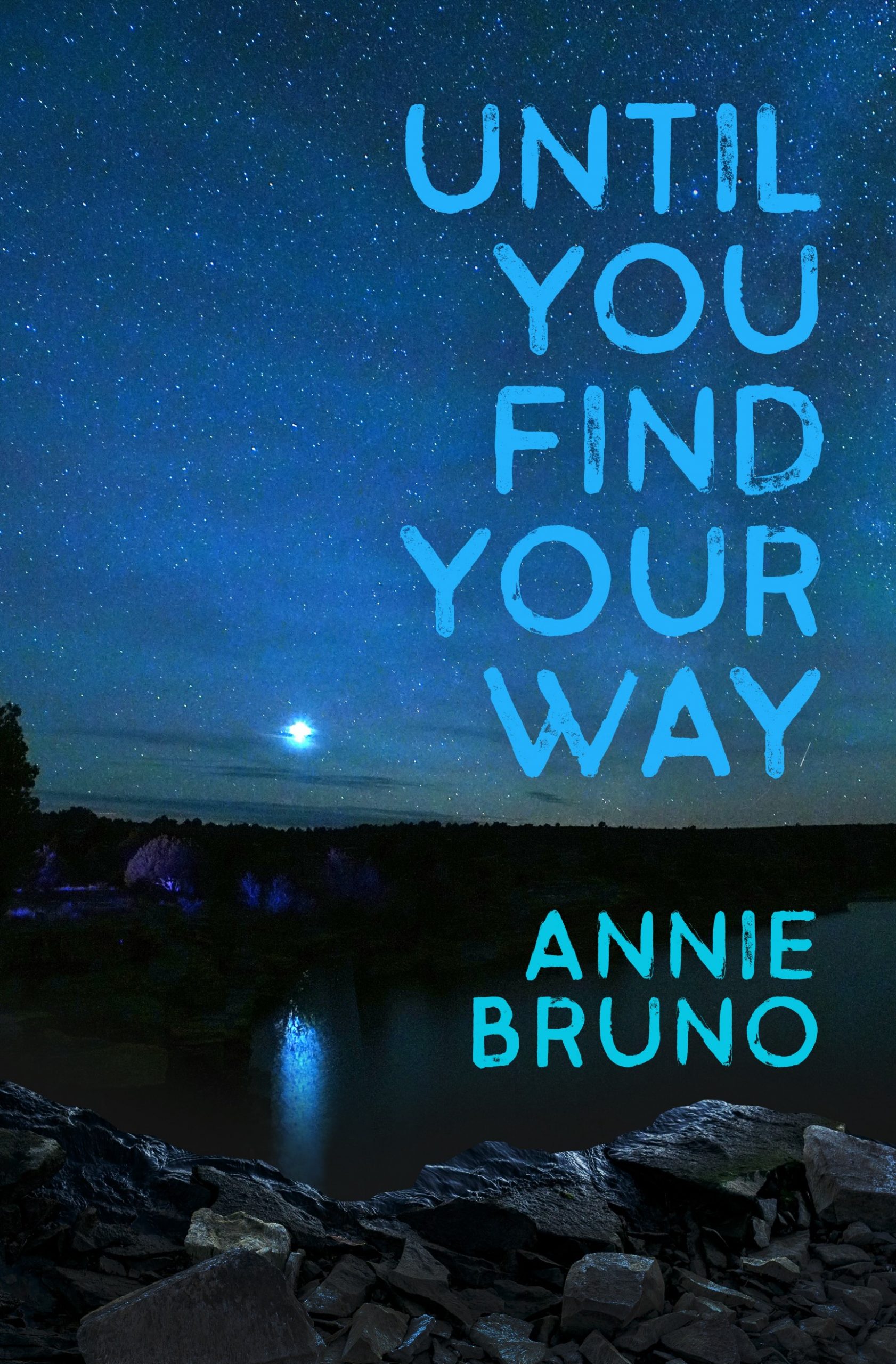
The winner of Howling Bird Press’s 2025 Fiction Prize is Annie Bruno, for her novel Until You Find Your Way. Her novel will be published by Howling Bird Press this March, and is available for preorder now from Itasca Books!

Until You Find Your Way by Annie Bruno (forthcoming March 23, 2026)

Fiction

Preorder from Itasca Books, Amazon, Barnes and Noble, or Bookshop 

In the aftermath of losing their eldest child, Beada and Porter have become an estranged couple, living on different continents. She’s in rural Minnesota raising their two other teens, while Porter visits from Bangkok “when he can,” disguising his pain as arrogance. When Beada’s only outlet—careful, unorthodox confessions to the local priest—take an abrupt turn, a quiet but seismic shift forces everyone in the family to decide what they cannot live without.

“With precise, exquisite prose, Bruno illuminates the relationship between loss and desire and how the heart can find its way when it learns to let go.” —Cassandra Garbus, author of Solo Variations and winner of the American Short Fiction Halifax Ranch Fiction Prize

2025 Howling Bird Press Fiction Contest Finalists and Semifinalists

Congrats to the Finalists of the 2025 Howling Bird Press Fiction Contest (listed in alphabetical order)

A winner will be selected from this finalist list and announced by February 2025.

  • The Field Road, Annie Bruno
  • Extinction for Beginners, Randi Hacker
  • Filthy Rich, or Average Life Expectancy at the End of the World, Terra Travis
  • Palace, Em Williamson
  • Do You Remember Me?, Jeffrey Winter

And congratulations to our semifinalists:

  • What Was Left Became Its Body, Brenna Lee
  • Creeper, Taylor Sykes

Thank you to all our incredible submitters. We were blown away by the quality of the submissions we received and had an incredibly difficult time narrowing down to these semifinalists and finalists. We appreciate the talent, time, and dedication that goes into putting together such works and look forward to seeing you continue to blow readers away in your future writing endeavors!

2024 Howling Bird Press Poetry Prize Winner

Howling Bird Press is pleased to announce that Emily Hyland is the winner of the 2024 Howling Bird Press Poetry Prize for her manuscript Divorced Business Partners. The manuscript was selected by students at Augsburg University’s MFA program from a short-list of nine finalists and will be published by Howling Bird Press in fall 2024.

Divorced Business Partners follows spouses as they take on a business venture and open a restaurant. The little business quickly becomes successful, but their marriage collapses in the process. Before they know it, husband and wife are nothing more than divorced business partners.

Emily Hyland’s poetry has appeared in The Brooklyn Review, Frontier Poetry, and The Hollins Critic, among others. She earned her MFA in poetry and her MA in English education from Brooklyn College. Her cookbook, Emily: The Cookbook, was published by Ballantine Books, an imprint of Random House, in 2018. Hyland is the eponymous co-founder of the international restaurant groups Pizza Loves Emily + Emmy Squared Pizza. She lives in Santa Fe, New Mexico, where she writes and teaches yoga. emilyhyland.com / emmysquaredpizza.com / pizzalovesemily.com

Howling Bird Press, the publishing house of Augsburg University’s MFA in Creative Writing, offers an annual prize that results in book publication. As a teaching press, we are staffed by graduate students enrolled in our Publishing Concentration. Our prize alternates genres annually, from poetry to fiction to nonfiction. In April 2024, we will open for submissions for our Fiction prize. We hope to see your manuscript then.

2024 Howling Bird Press Poetry Contest Finalists and Semifinalists

Congrats to the Finalists of the 2024 Howling Bird Press Poetry Contest (listed in alphabetical order)

A winner will be selected from this finalist list in January 2024 and announced by February.

  • Villain(era), John Andrews
  • subway psalms, Tamar Ashdot
  • Venus of the Midwest, Justine Defever
  • Divorced Business Partners, Emily Hyland
  • Gothic, April Lindner
  • Thirsty, C. Eliot Mullins
  • Imagine a Woman, Dorothy Neagle
  • Heartbreak and Spaceships in the Age of Extraterrestrials, Osmani Ochoa
  • Mending of a Body, TW Sia

And congratulations to our semifinalists:

  • Finding Meteorites in Antarctica, Paul Brooke
  • The Book of Drought, Robert Carney
  • Fortuna Redux, Faith Ellington
  • The Stoop and the Steeple, Nancy Meyer
  • Refugee, Erika Michael
  • All the Salty Sand in Our Mouths, Samodh Porawagamage
  • Otherly, Rebecca Reynolds
  • Rooting for Spices, Rod Carlos Rodriguez
  • A Wonder of Furies, Stella Witcher

Thank you to all our incredible submitters. We were blown away by the quality of the submissions we received and had an incredibly difficult time narrowing down to these semifinalists and finalists. We appreciate the talent, time, and dedication that goes into putting together such works and look forward to seeing you continue to blow readers away in your future writing endeavors!

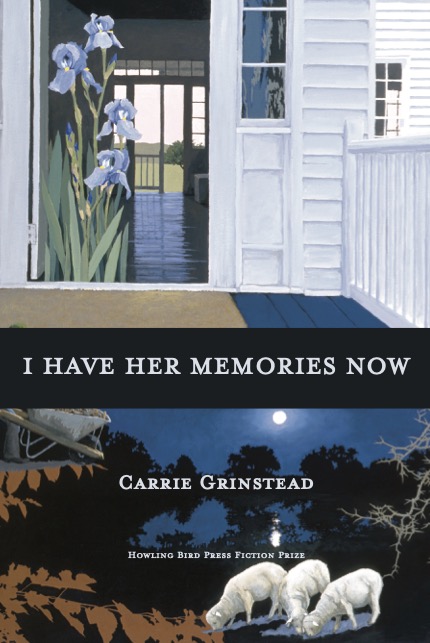
Rave Review of I HAVE HER MEMORIES NOW!

Cover art by Tom Bartek

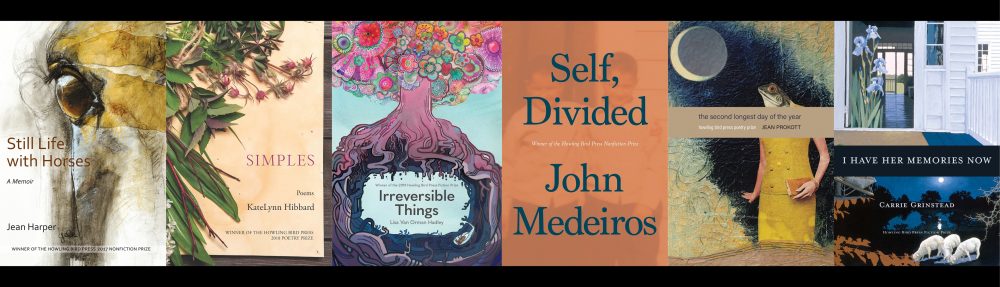
The Masters Review has posted a wonderful review of our 2022 Fiction Prize winner, I Have Her Memories Now by Carrie Grinstead! Reviewer Cole Meyer writes, “Grinstead brings her remarkable talent to each story in this slim collection. There are only six stories, but every single line earns its stay. Grinstead shows again and again that she has a gift for the surprising but inevitable conclusion, and it’s no wonder Howling Bird Press selected this collection for this year’s book prize. The path of each of these stories is so particular, I can’t imagine any writer other than Grinstead having penned them.” To read the full review, visit The Masters Review here.

Now Reading Nonfiction Manuscripts!

From April 2 through July 31, 2022, we are accepting submissions in nonfiction. The press welcomes innovative, original work from established and emerging authors. The competition is open to all writers in English living in the U.S., whether published or unpublished. Manuscript length should be between 20,000 and 60,000 words. File formats should be either Word .doc or .docx. Pages should be numbered; include author’s name and address.

Include a cover letter in the form provided online, and list contact information and a short (100 to 200 word) bio. There is a $25 entry fee. Current and former students of Augsburg’s MFA in Creative Writing are ineligible, as are current faculty and staff of Augsburg University. Submitters must be the original author, not an agent of/for the author. The winner is announced in January 2023. The winner receives $2,500 and book publication in fall 2023. 

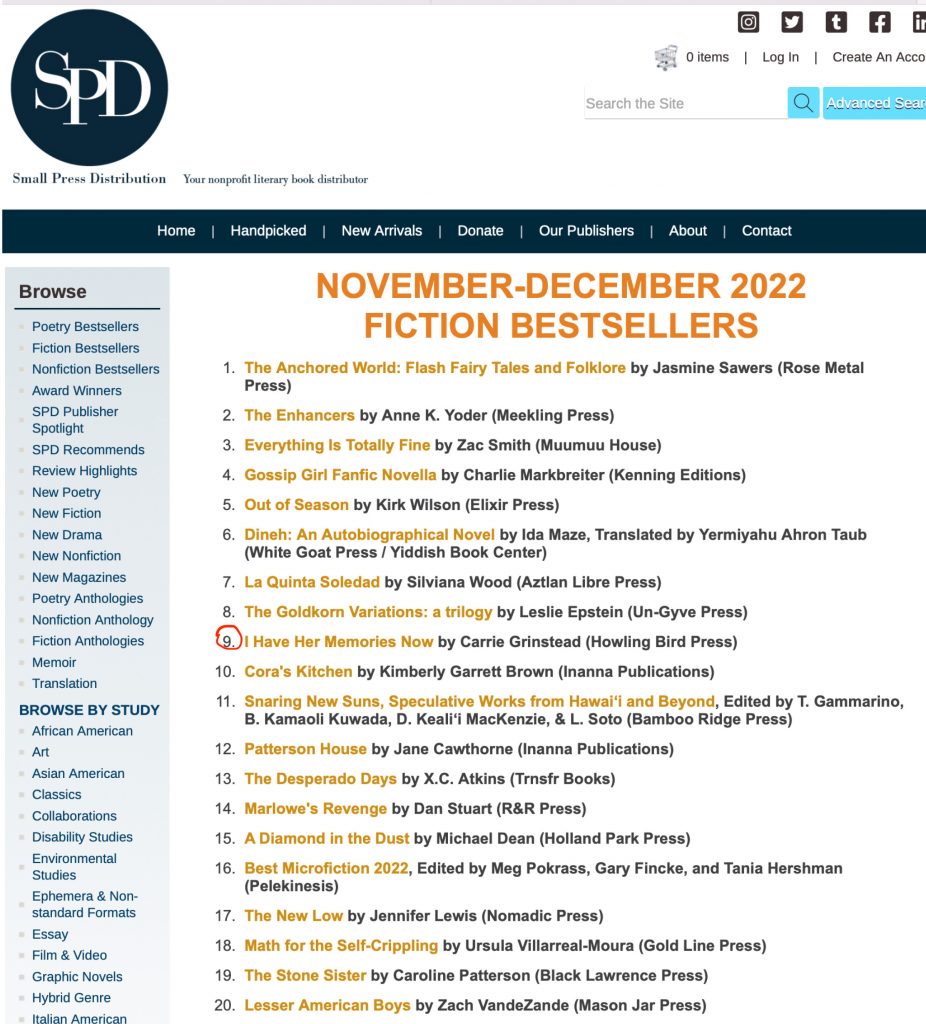
Howling Bird Press books are distributed by Small Press Distribution, and are available at online retailers and in bookstores nationwide.

https://augsburghowlingbirdpress.submittable.com/submit

SELF, DIVIDED named a Minnesota Book Award Finalist

The Friends of the Saint Paul Public Library announced the finalists for the Minnesota Book Award on January 29, 2022. Howling Bird Press nonfiction prize winning title Self, Divided by John Medeiros was named one of four finalists in the category of memoir and creative nonfiction.

The winner will be announced at the Thirty-Fourth Annual Minnesota Book Awards on April 26, 7:00 p.m., in Saint Paul at the Ordway Center for the Performing Arts. For more information, visit the website for the Friends of the Saint Paul Public Library.

Self, Divided was selected from a national contest run by Howling Bird Press, and was edited, and published by student editors enrolled in Publishing I & II, the yearlong English course offered by the MFA Program in Creative Writing at Augsburg University, taught by James Cihlar.

“Self, Divided is an immersive journey to the self’s ‘true north’ against the backdrop of identical twinship, growing up working class, coming out, and living with HIV/AIDS, ” writes novelist Brian Malloy. “Captivating not only for Medeiros’s evocative lyricism, but also for his original and imaginative use of narrative space, his quest to create an identity all his own is a sad, funny, and memorable story of growth against the odds, written in the language of hard-won victory.”

In 1995 John Medeiros and his identical twin brother participated in a gene therapy study in which the HIV-positive twin was infused with billions of genes from the HIV-negative twin. This memoir details, from an individual perspective, how the world responded (and didn’t respond) to the first (and still ongoing) pandemic of HIV/AIDS. Self, Divided explores the dysfunctional yet enduring relationships that surround this pivotal moment in Medeiros’s life and family, brilliantly capturing how we all are connected, in one way or another, to those around us. 

Author Barrie Jean Borich writes, “Most memoirs grapple with the individual seen again, but for John Medeiros this mirroring is literal. Self, Divided considers the author’s life as an identical twin. One brother is gay and HIV-positive, the other a straight Christian, each part of a whole that will not divide, even in times of desperate separation. How can two men, intermingled since birth but whose life paths diverge, come to truly brother one another? Rendered in lyric form that is at once severed and continuous, this memoir pulses deep.” 

John Medeiros is a poet, memoirist, identical twin, and lawyer. He is the author of couplets for a shrinking world and co-editor of Queer Voices: Poetry, Prose, and Pride. His work has appeared in numerous anthologies and literary journals, and he is the recipient of two Minnesota State Arts Board grants, Gulf Coast’s Nonfiction Award, and the AWP Intro Journals Award. He has an MFA and a JD from Hamline University, and he lives in Minneapolis, Minnesota, with his husband.